
26 Jun Why Jigsaw Puzzles Are One of the Most Profitable Toy Businesses – A Manufacturer’s Journey and Insights
When people hear the word jigsaw puzzle, many imagine children sitting on the floor fitting colorful pieces together. As someone who manufactures jigsaw puzzles, I can confidently say that this is only a small part of the story.
A jigsaw puzzle is one of the few products in the toy industry that has truly stood the test of time. Unlike toys that go in and out of fashion, puzzles continue to be enjoyed by toddlers, school children, teenagers, adults, families, hobbyists, educators, and even senior citizens. Every year we see new themes, improved artwork, innovative materials, and fresh learning concepts, making puzzles relevant across generations.
When we entered the toy manufacturing business, we realized that puzzles were not just another educational toy—they represented an entire category with endless opportunities for creativity, learning, and business growth.
Why the Puzzle Business Has Endless Opportunities
One of the biggest advantages of manufacturing or selling puzzles is that there is virtually no limit to product development.
A single idea can be transformed into dozens of different products simply by changing the number of pieces, artwork, target age group, or educational objective.
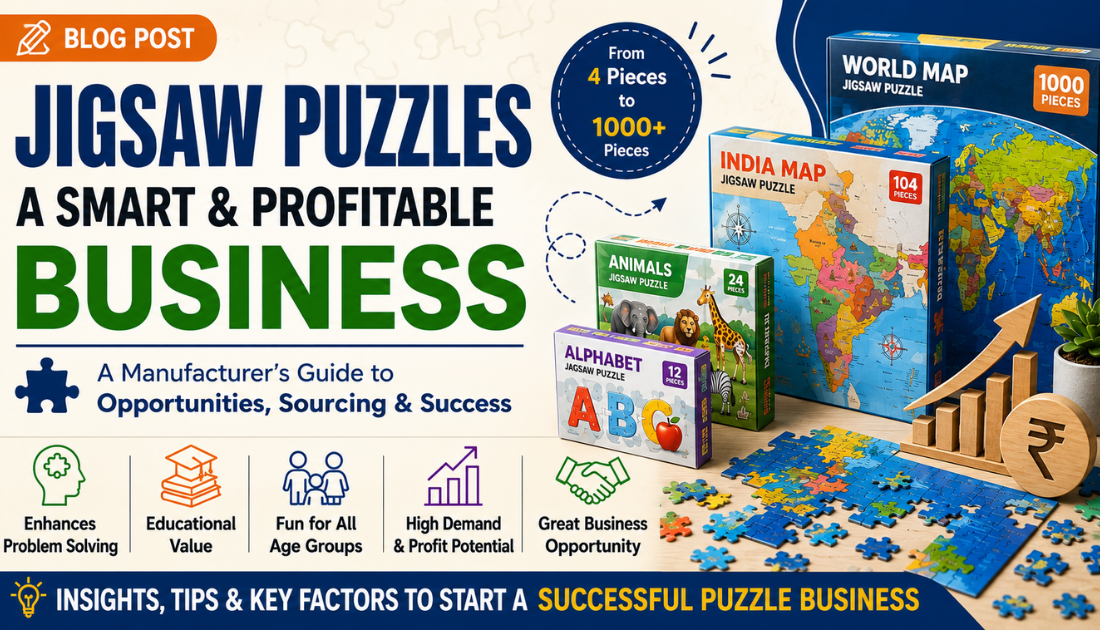
A puzzle can start with as few as 4 pieces for toddlers learning their first shapes and gradually progress to 12 pieces, 24 pieces, 48 pieces, 60 pieces, 100 pieces, 200 pieces, 500 pieces, 1000 pieces, and even several thousand pieces for puzzle enthusiasts.
This flexibility allows manufacturers and retailers to serve almost every customer segment without changing the core product concept. Businesses looking to enter or expand in this growing market can explore opportunities with an educational puzzles manufacturer in India offering a wide range of puzzle concepts for different age groups, learning objectives, and market segments.
A Puzzle for Every Age Group
Very few toys can genuinely appeal to every generation.
Jigsaw puzzles are different.
Toddlers (2–4 Years)
- Shape recognition
- Colour identification
- Hand-eye coordination
- Fine motor skill development
Preschool Children (3–5 Years)
- Alphabet puzzles
- Number puzzles
- Animal puzzles
- Vegetable and fruit puzzles
- Transport puzzles
School Children (5–10 Years)
- India Map puzzles
- World Map puzzles
- Solar System puzzles
- Science puzzles
- Human body puzzles
- Educational STEM puzzles
Teenagers
- Geography
- History
- Art
- Advanced educational puzzles
Adults
- Landscape puzzles
- Architecture
- Wildlife
- Fine art
- Photography
- Collectible puzzles
Senior Citizens
Many seniors enjoy puzzles because they provide a relaxing, screen-free activity that encourages concentration, memory, and cognitive engagement.
This wide customer base makes puzzles one of the most versatile categories in the toy industry.
Puzzles Are More Than Entertainment
One misconception is that puzzles are only meant to keep children occupied.
In reality, every puzzle teaches something.
Depending on the design, a puzzle can help develop:
- Problem-solving skills
- Logical thinking
- Spatial awareness
- Memory
- Patience
- Concentration
- Observation
- Creativity
- Fine motor skills
- Hand-eye coordination
- Teamwork when solved together
- Confidence through achievement
This combination of education and entertainment is why puzzles are often described as “learning through play.”
Educational Toys Continue to Grow
Parents today are becoming more selective about the toys they buy.
Instead of looking only for entertainment, many now prefer educational toys that help children learn while they play.
This has created strong demand for:
- Learning puzzles
- Montessori-inspired puzzles
- STEM toys
- Geography puzzles
- Alphabet puzzles
- Number puzzles
- Science puzzles
- Educational board games
For retailers and distributors, this means the educational toy segment offers significant long-term potential.
Why Puzzles Can Be a Profitable Business
Over the years, we’ve found several reasons why puzzles remain an attractive business opportunity.
Broad Customer Base
Puzzles appeal to children, parents, schools, libraries, toy stores, bookstores, educational institutions, and gift shops.
Low Product Obsolescence
Unlike many trendy toys, a well-designed puzzle remains relevant for years.
Endless Product Variations
A single illustration can be adapted into multiple piece counts and age groups, creating an extensive product range from the same artwork.
Year-Round Demand
Puzzles are purchased for birthdays, return gifts, festivals, schools, educational activities, family game nights, and holidays, making them suitable for all seasons.
Easy to Expand
Once a customer trusts your quality, it’s natural for them to purchase additional themes or higher piece-count puzzles.
Choosing the Right Puzzle Manufacturer
If you’re planning to start selling puzzles under your own brand, choosing the right manufacturing partner is one of the most important decisions you’ll make.
Here are a few factors we believe every buyer should consider:
Material Quality
A premium puzzle begins with the board.
High-quality Kappa board offers better durability, cleaner cuts, a satisfying fit, and a longer product life. Inferior materials can bend, peel, or wear out quickly.
Printing Quality
Vibrant colours and sharp image reproduction make puzzles more enjoyable and improve the overall customer experience.
Precision Cutting
Puzzle pieces should fit securely without being overly tight or too loose. Accurate die-cutting is essential.
Safety Standards
For children’s products, ensure the puzzles are made using non-toxic materials and comply with applicable safety regulations in your target market.
Packaging
Well-designed packaging protects the product during shipping and helps it stand out on retail shelves and online marketplaces.
Product Development Capability
A manufacturer that can create custom artwork, different piece counts, and exclusive designs can help you build a unique brand.
Finding the Right Product Mix
One of the best strategies for retailers is to offer puzzles across multiple themes and age groups.
Popular categories include:
- India Map Puzzle
- World Map Puzzle
- Solar System Puzzle
- Alphabet Puzzle
- Number Puzzle
- Animal Puzzle
- Dinosaur Puzzle
- Space Puzzle
- Vehicle Puzzle
- Wildlife Puzzle
- Human Body Puzzle
- Historical Monument Puzzle
- Preschool Learning Puzzle
- Educational Flash Puzzle
- STEM Learning Puzzle
A diverse collection encourages repeat purchases and appeals to families with children of different ages.
The Future of the Puzzle Industry
As digital screens occupy more of our daily lives, families are increasingly looking for activities that encourage interaction away from devices.
Jigsaw puzzles offer exactly that.
They create opportunities for parents and children to spend meaningful time together, support classroom learning, and provide a relaxing hobby for adults.
With growing interest in educational toys, sustainable materials, and screen-free play, the future of the puzzle industry remains bright.
Final Thoughts from a Puzzle Manufacturer
After years in manufacturing, one lesson stands out: a great puzzle is never just a collection of cardboard pieces.
It is a product that sparks curiosity, encourages conversation, builds confidence, and brings people together.
For entrepreneurs, puzzles offer a business with remarkable versatility. The same product can educate a preschooler, challenge a teenager, entertain a family, and become a relaxing hobby for an adult.
If you’re considering entering the toy business, don’t view puzzles as a small niche. View them as a category with limitless possibilities for innovation, branding, and long-term growth.
As manufacturers, we continue to believe that every well-designed puzzle creates value far beyond the finished product—it creates moments of learning, discovery, and connection that families remember for years.
Frequently Asked Questions by Bulk Buyers
Over the years, we’ve spoken with hundreds of retailers, distributors, educational institutions, and private label brands. These are some of the most common questions they ask before partnering with a jigsaw puzzle manufacturer.
1. What is the ideal puzzle piece count to start selling?
There is no one-size-fits-all answer. A balanced product range usually includes beginner puzzles (12–24 pieces), educational puzzles (24–104 pieces), and advanced puzzles (200 pieces and above). The right mix depends on your target customers and sales channels.
2. Which puzzle themes have the highest demand?
Educational puzzles consistently perform well because parents and schools value learning through play. Popular themes include India Map, World Map, Solar System, Animals, Dinosaurs, Alphabet, Numbers, Space, Vehicles, and Wildlife. Timeless themes generally have a longer shelf life than trend-based designs.
3. Can I sell puzzles under my own brand?
Yes. Many manufacturers offer private label or OEM services, allowing you to build your own brand. This gives you greater control over pricing, branding, and long-term customer loyalty.
4. What should I look for when choosing a puzzle manufacturer?
Look beyond price. Evaluate product quality, board material, print finish, precision die-cutting, packaging standards, product innovation, manufacturing capacity, quality control, and the manufacturer’s ability to develop new educational concepts.
5. What board material should I choose?
The quality of the board directly affects customer satisfaction. Premium Kappa board provides excellent durability, a better fit between pieces, and a premium feel that customers appreciate.
6. Can the puzzles be customized?
A capable manufacturer should be able to customize artwork, puzzle size, piece count, packaging, branding, and educational content. Customization allows your products to stand out in an increasingly competitive toy market.
7. How important is puzzle design?
Design is one of the biggest factors in a puzzle’s success. Well-researched artwork, age-appropriate difficulty, engaging themes, and educational value help products stand out. A unique and thoughtfully designed puzzle is far more likely to become a repeat purchase than one that simply copies existing products.
8. What certifications should I ask about?
If you plan to sell children’s puzzles, ask whether the products comply with the safety requirements applicable in your target market. Safe, non-toxic materials and consistent quality standards are essential for building customer trust.
9. What is the minimum order quantity (MOQ)?
Minimum order quantities vary depending on the manufacturer, product specifications, and customization requirements. If you’re starting a new brand, discuss your business goals with the manufacturer to identify the most suitable order size.
10. Are puzzles a seasonal product?
No. While sales typically increase during festivals, holidays, and the back-to-school season, educational puzzles enjoy year-round demand. They are purchased as gifts, classroom resources, homeschooling materials, return gifts, and family activities.
11. How can I differentiate my puzzle business from competitors?
Focus on quality rather than simply competing on price. Offer unique educational themes, premium materials, attractive packaging, age-specific collections, and products that provide genuine learning value. Retailers who invest in distinctive products are more likely to build customer loyalty and reduce direct price competition.
12. Is the puzzle business profitable in the long run?
The puzzle industry continues to grow because it serves multiple customer segments and adapts to changing educational needs. With the right product range, dependable manufacturing partner, consistent quality, and strong branding, a puzzle business can become a sustainable and profitable venture.
Still Have Questions?
Looking for a reliable jigsaw puzzle manufacturer?
Whether you’re launching your own toy brand, sourcing educational puzzles, or looking for custom puzzle manufacturing, we’re happy to share our experience and help you choose the right products for your business. Contact us to discuss your requirements, product ideas, or private label opportunities.
Sorry, the comment form is closed at this time.